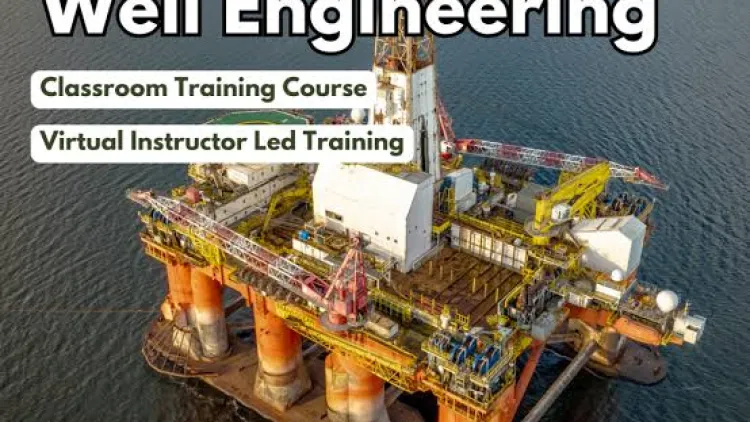
15 Topics
 5 Days
 74 Sessions
Programme Overview
Training Description
- Directional drilling engineers
- Drilling engineers
- Well planning engineers
- Petroleum engineers
- Drilling supervisors
- Wellsite drilling personnel
- Geologists and geophysicists
- Reservoir engineers
- MWD/LWD specialists
- Geosteering professionals
- Well integrity specialists
- Drilling contractors and service-company personnel
- Oil and gas operations managers
Session Objectives
- Master well trajectory design and survey calculations. Utilize directional drilling tools and techniques. Implement anti-collision analysis and risk assessment. Design and build torque and drag models. Optimize well planning using advanced software and simulations. Troubleshoot and address common challenges in directional drilling. Implement well integrity and safety standards. Integrate well planning with geological and reservoir models.
About the Course
The Directional Drilling and Well Planning Training Course provides oil and gas professionals with practical knowledge and techniques for planning, designing, and executing directional and complex well operations. The course covers well trajectory design, directional drilling principles, bottom-hole assemblies, drilling systems, anti-collision planning, wellbore positioning, and real-time trajectory management.Participants will develop an understanding of how to design efficient well trajectories while managing geological, technical, operational, and safety constraints. The course also examines modern directional drilling technologies, measurement-while-drilling (MWD), logging-while-drilling (LWD), rotary steerable systems, geosteering, wellbore stability, and drilling performance optimization.
Curriculum & Topics
15 Topics | 74 Sessions
-
 Workshop 1.1:
Fundamentals of directional drilling and well planning.
-
Workshop 1.2:
Overview of directional drilling principles and methodologies.
-
Workshop 1.3:
Setting up a well planning and design workflow.
-
Workshop 1.4:
Introduction to directional drilling software and tools.
-
Workshop 1.5:
Best practices for directional drilling and planning.
-
Workshop 2.1:
Mastering well trajectory design and survey calculations.
-
Workshop 2.2:
Utilizing minimum curvature, radius of curvature, and other survey methods.
-
Workshop 2.3:
Implementing well path design and optimization.
-
Workshop 2.4:
Designing and building well trajectory models.
-
Workshop 2.5:
Best practices for trajectory design.
-
Workshop 3.1:
Utilizing directional drilling tools and techniques.
-
Workshop 3.2:
Implementing measurement while drilling (MWD) and logging while drilling (LWD).
-
Workshop 3.3:
Utilizing rotary steerable systems (RSS) and mud motors.
-
Workshop 3.4:
Designing and building directional drilling programs.
-
Workshop 3.5:
Best practices for directional drilling tools.
-
Workshop 4.1:
Implementing anti-collision analysis and risk assessment.
-
Workshop 4.2:
Utilizing proximity calculations and collision avoidance techniques.
-
Workshop 4.3:
Implementing risk management and contingency planning.
-
Workshop 4.4:
Designing and building anti-collision models.
-
Workshop 4.5:
Best practices for anti-collision.
-
Workshop 5.1:
Designing and build torque and drag models.
-
Workshop 5.2:
Utilizing friction factors and pipe mechanics.
-
Workshop 5.3:
Implementing wellbore hydraulics and stress analysis.
-
Workshop 5.4:
Designing and building torque and drag simulations.
-
Workshop 5.5:
Best practices for torque and drag.
-
Workshop 6.1:
Optimizing well planning using advanced software and simulations.
-
Workshop 6.2:
Utilizing drilling engineering software and tools.
-
Workshop 6.3:
Implementing drilling simulations and modeling.
-
Workshop 6.4:
Designing and building automated planning workflows.
-
Workshop 6.5:
Best practices for software applications.
-
Workshop 7.1:
Troubleshooting and addressing common challenges in directional drilling.
-
Workshop 7.2:
Analyzing drilling data and operational issues.
-
Workshop 7.3:
Utilizing problem-solving techniques for resolution.
-
Workshop 7.4:
Resolving common directional drilling errors.
-
Workshop 7.5:
Best practices for troubleshooting.
-
Workshop 8.1:
Implementing well integrity and safety standards.
-
Workshop 8.2:
Utilizing well control and pressure management.
-
Workshop 8.3:
Implementing safety protocols and risk assessment.
-
Workshop 8.4:
Designing and building well integrity programs.
-
Workshop 8.5:
Best practices for well integrity.
-
Workshop 9.1:
Integrating well planning with geological and reservoir models.
-
Workshop 9.2:
Utilizing geological data and reservoir simulations.
-
Workshop 9.3:
Implementing geosteering and formation evaluation.
-
Workshop 9.4:
Designing and building integrated well planning models.
-
Workshop 9.5:
Best practices for integration.
-
Workshop 10.1:
Understanding how to manage complex directional drilling projects.
-
Workshop 10.2:
Utilizing project management tools and techniques.
-
Workshop 10.3:
Implementing program evaluation and reporting.
-
Workshop 10.4:
Designing scalable drilling solutions.
-
Workshop 10.5:
Best practices for project management.
-
Workshop 11.1:
Exploring advanced directional drilling applications (automated drilling, geosteering).
-
Workshop 11.2:
Utilizing automated drilling systems and technologies.
-
Workshop 11.3:
Implementing geosteering and real-time formation evaluation.
-
Workshop 11.4:
Designing and building advanced drilling systems.
-
Workshop 11.5:
Optimizing advanced applications for specific use cases.
-
Workshop 12.1:
Applying real world use cases for directional drilling in various drilling scenarios.
-
Workshop 12.2:
Utilizing directional drilling in offshore operations.
-
Workshop 12.3:
Implementing directional drilling in unconventional reservoirs.
-
Workshop 12.4:
Best practices for real-world applications.
-
Workshop 12.5:
Utilizing directional drilling in extended reach drilling (ERD).
-
Workshop 13.1:
Leveraging directional drilling tools and frameworks for efficient operations.
-
Workshop 13.2:
Utilizing industry-standard drilling engineering software.
-
Workshop 13.3:
Implementing data visualization and reporting tools.
-
Workshop 13.4:
Designing and building automated planning workflows.
-
Workshop 13.5:
Best practices for tool implementation.
-
Workshop 14.1:
Implementing directional drilling monitoring and metrics.
-
Workshop 14.2:
Utilizing drilling performance indicators and KPIs.
-
Workshop 14.3:
Designing and building monitoring systems for drilling projects.
-
Workshop 14.4:
Optimizing monitoring for real-time insights.
-
Workshop 14.5:
Best practices for monitoring.
-
Workshop 15.1:
Emerging trends in directional drilling technologies and applications.
-
Workshop 15.2:
Utilizing digital drilling technologies and automation.
-
Workshop 15.3:
Implementing advanced sensor and monitoring systems.
-
Workshop 15.4:
Best practices for future directional drilling.